Roof repair or full tear-off: how to decide before winter hits
A leak does not always mean a new roof, and a new roof is not always overkill. Here is how to sort one from the other.
October 16, 2026 · 4 min read
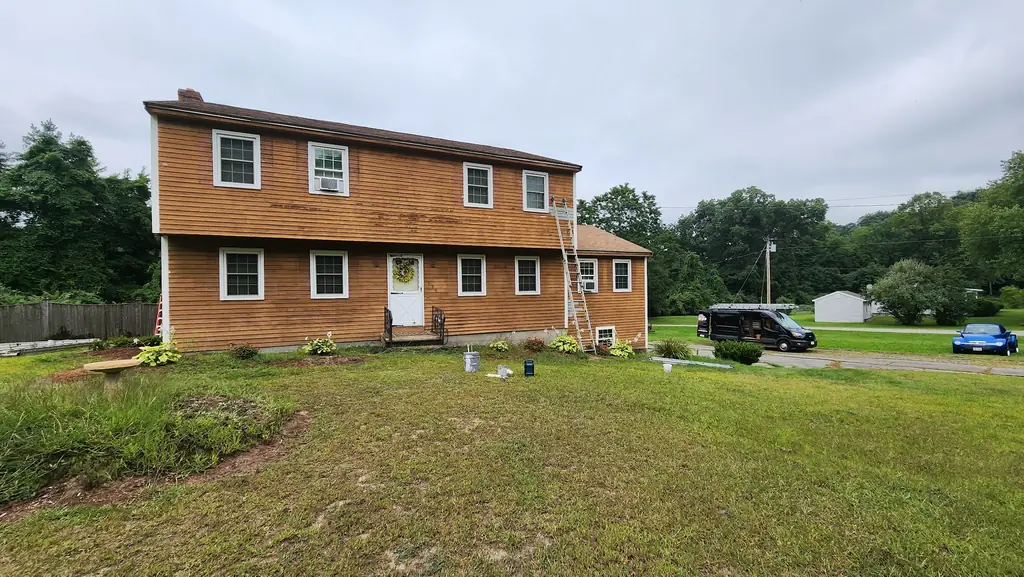
Every fall, the same phone call comes in to roofers across central Massachusetts. A homeowner spots a brown stain on a bedroom ceiling, or finds a few shingles in the flower bed after a windy night, and wants to know one thing: can this be fixed, or does the whole roof have to go? It is a fair question, and the honest answer is that it depends on what the roof is telling you. Here is how to read it.
What a repair can honestly fix
A repair makes sense when the problem is local and the rest of the roof is still doing its job. Think of a roof as a system: shingles shed water, underlayment backs them up, flashing seals every place where the roof meets something else, and the deck underneath holds it all together. If one of those pieces has failed and the others are sound, fixing that one piece is the right move.
- A handful of missing or cracked shingles after a storm, with sound shingles all around them
- Flashing that has pulled loose or rusted at a chimney, a vent pipe or a wall line
- A single leak that traces back to one penetration, such as a skylight or plumbing vent
- Damaged gutters or fascia that let water back up under the lowest course of shingles
The key phrase is "sound all around." A repair is only as good as the material it is tied into. If you slide new shingles in among old ones that are brittle, the nails holding the neighbors can fail the first time someone steps near them.
Signs a tear-off is the better call
A complete tear-off means stripping the roof down to the deck, inspecting the wood, and building the roof back up in order. It costs more effort than a patch, but sometimes a patch is just money spent to delay the same job.
- Shingles curling, cupping or losing their granules across large areas, not just one slope
- Granules collecting in your gutters or at the bottom of downspouts in quantity
- Multiple leaks showing up in different parts of the house
- A roof with more than one layer already on it, where moisture can hide between layers
- Soft or spongy spots when the deck is checked from inside the attic
- Daylight visible through the roof boards from the attic
Age matters too, but it is not the whole story. A roof that was installed carefully, with good ventilation, can outlast one that was rushed. The reverse is also true. What you want to know is the condition of the material you have today, not just a number on a calendar.
Why ice dams change the math
In New England, a roof does not only face rain. It faces freeze and thaw, week after week. Ice dams form when heat escaping from the living space warms the roof deck, melts the snow above, and that meltwater runs down to the cold eave where it refreezes. The ice builds into a ridge, and the next round of meltwater has nowhere to go. It backs up under the shingles and into the house.
If you have had ice dams, the roof surface is only part of the question. Missing insulation, leaky attic hatches and poor ventilation are usually behind them. A good contractor will look at the attic as well as the shingles, because a brand new roof over a leaky attic can end up with the same ice problem a year later.
Why timing matters in a cold climate
Asphalt shingles seal themselves down with a heat-activated strip. In cold weather that seal can be slow to form, which is why most major roofing is easier in the milder months. That said, emergencies do not wait for April. A roof that is actively leaking in January can usually be made watertight with a proper repair, and the larger replacement can be planned for when conditions favor it.
If you are on the fence in October, that is a good time to act. The weather is still workable, the days are still long enough to finish a job, and you are not racing a storm. Waiting until the first heavy snow takes away your choices.
A few questions to ask any roofer
- Will you inspect the deck and the attic, or only the shingles?
- What will you do about flashing at the chimney, walls and vents?
- Are you licensed and insured, and can I see the license numbers?
- What brand of materials will go on, and what protects the roof edges?
- Will the person I am talking to be on site during the work?
That last question matters more than people expect. When the owner is the one standing on your lawn, decisions get made faster and mistakes get caught.
Getting a straight answer
JMP Construction Corp. of Leominster does roof repairs, shingle roofs, flat and rubber roofs, and complete tear-offs for homes and commercial buildings, and Jay is present on each job site. If you are not sure whether you need a patch or a new roof, call (978) 235-4746 for a free estimate. You will get an honest read on what the roof actually needs, and if a repair will do the job, that is what you will hear. You can see the roofing work JMP handles on the roofing page of this site, or reach out through the contact page.
JMP Construction Corp. of Leominster, (978) 235-4746
Call (978) 235-4746More articles
Is your old deck safe? What to check before you stain it again
Most deck failures start somewhere you can't easily see. Here is where to look, and when to call someone in.
Chimney flashing leaks: what the repair looks like start to finish
The brick is rarely the culprit. The thin metal where the chimney meets the roof usually is.